glass art and sustainability
by ANDREW MOOR
Is glass a sustainable medium? In what way can it contribute to making buildings more sustainable?
Glass Manufacture
Glass itself is manufactured from easily sourced raw materials - essentially sand, soda ash and limestone. Glass brings daylight into buildings, thus reducing the need for electric lighting and adding to human wellbeing.
Solar Gain
Nowadays, glass is often treated to create 'Low E' glass which helps reduce the thermal gain caused by sunlight. Glass artworks, which are often created using fritted glass, also offer a way to reduce the level of solar gain into an interior, and these can be done in combination with low E glass. Fritted glass can be described accurately as "enamelled glass" because a fritted glass has an vitreous enamel printed and fired into the surface of the glass. It is this printed image which can reduce both solar gain and solar glare. Countries with high levels of solar gain – which due to climate change is now becoming most countries – can greatly benefit from the reduction of sunlight penetration achieved by a fritted façade – especially if used in conjunction with Low E glass.
Solar Glare
Solar glare, which is also reduced by an enamelled or fritted glass, is most commonly experienced when the penetration of light makes it difficult for us to view our computer screens or do other activities that are difficult in direct bright sunlight. A fritted glazing mitigates this experience extremely effectively.
Case Studies
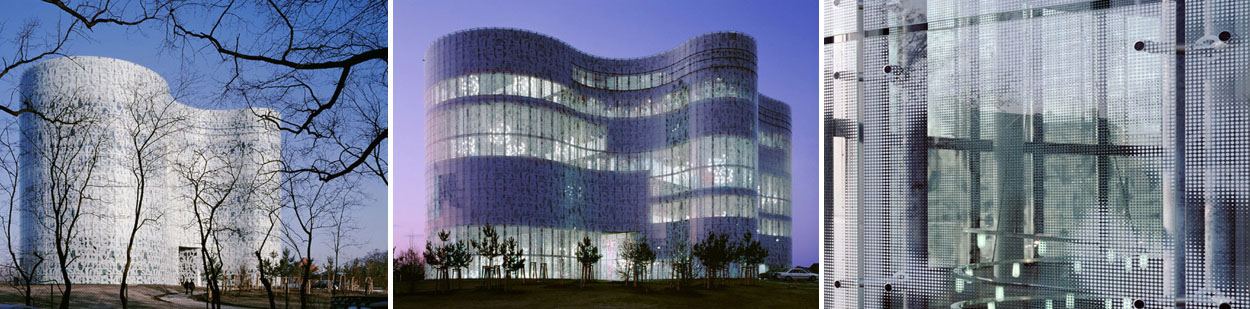
Herzon de Meuron have designed several buildings using a fritted façade to improve sustainability. In most of these cases the enamelled pattern covered every piece of glass in the building. Viel Arets, a globally celebrated Dutch architect, has also used glass frit as a way of making buildings more sustainable: To quote from the practice:
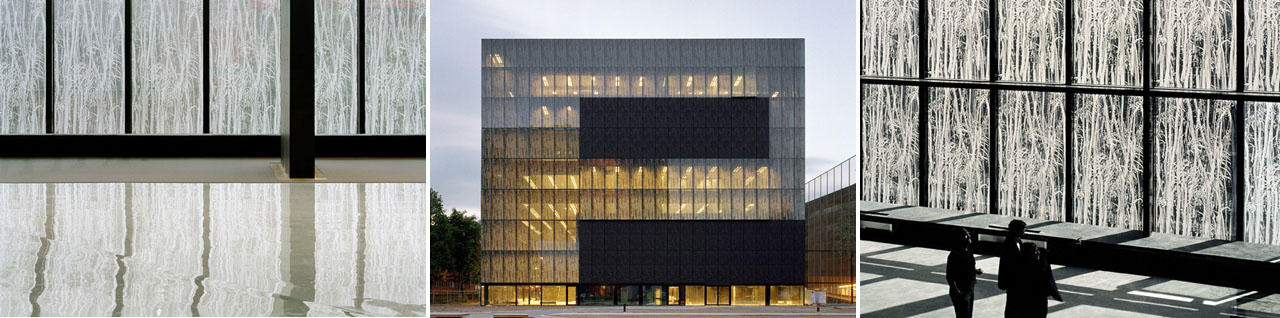
"The fritted facade of the Utrecht Law Library is, of course, much more than just a technical solution for daylight and energy. But the technical implication of using a fritted facade is indeed the reduction of solar gain and glare. The open bookshelves needed to be protected against heavy daylight, and the students studying in the library admire the resulting daylight conditions.
In many projects our practice has used the technique of fritting glass to give expression and identity to a project, for example the Hoogvliet School Project and Valid Office Tower in ?. Here also this technique helps us to control the climate inside. In the Project Allianz headquarters in Zurich, we developed this technique further into a unique 'zero energy facade', using different layers of glass, a print on th glass and curtains."
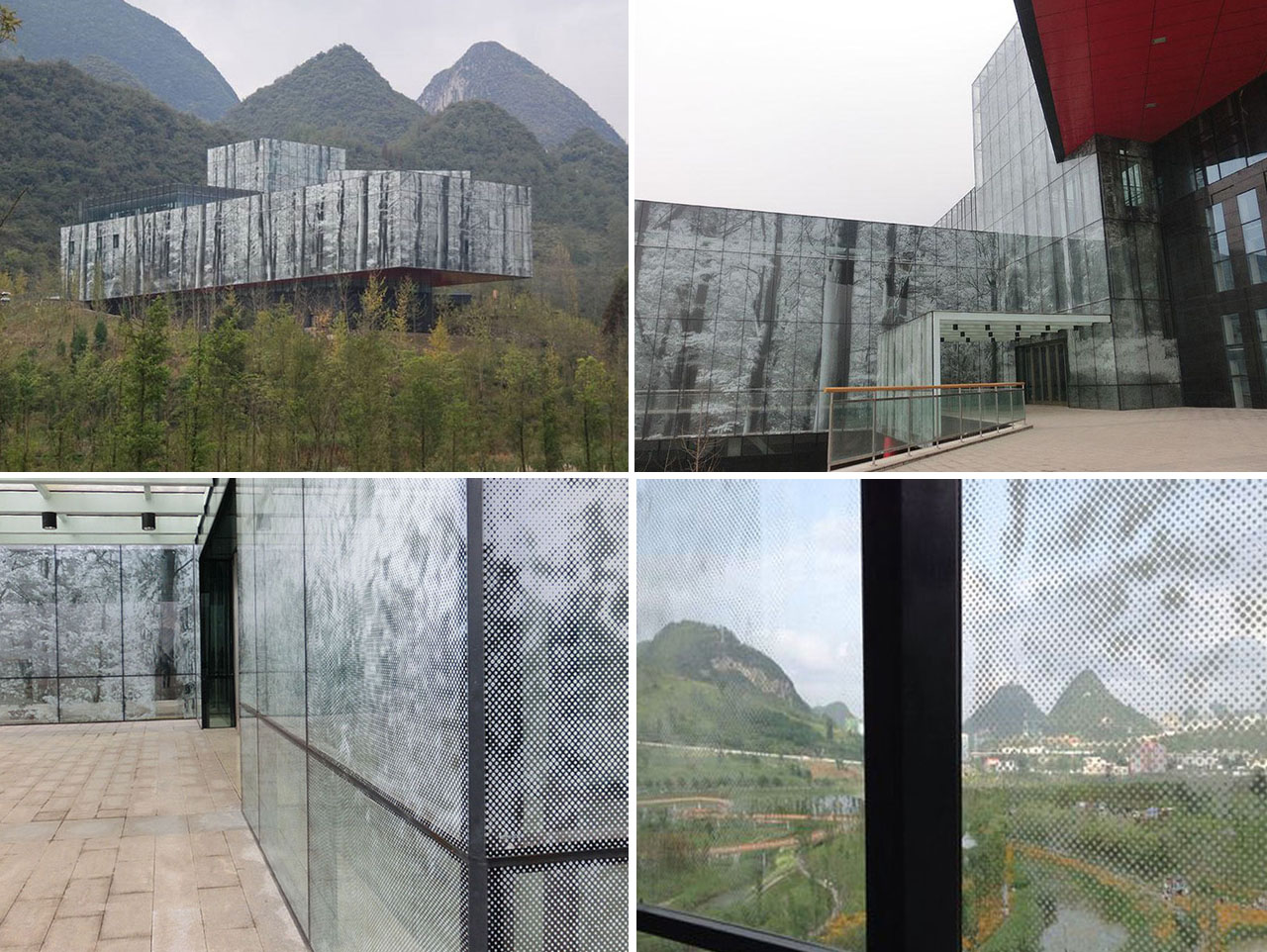
The Chinese are also being adventurous in this area, as we can see in the attached images. This is the Ghizou Art Gallery, where the façade and the entranceway are entirely covered in a beautifully designed glass frit, reducing solar gain and solar glare, and giving the building a unique, powerful and unforgettable brand.